In 2006, Michael Neblo and his collaborators ran the first-ever Deliberative Town Halls. It was a tiny sub-component of a larger NSF grant studying how to improve online Congressional communication. It was way before Zoom, so the research team had hacked together an online platform where constituents could listen and type in questions and comments to their Member of Congress— no video, just a picture of the Member and their voice going out live, with a court transcriptionist rapidly typing out a transcript for the hearing impaired.
From this humble experiment sprang some of the most widely cited findings in political science of the next decade. The original Connecting to Congress field experiments proved that these deliberative engagement events attracted not just the educated elites many expected, but people from every walk of life, every political leaning, and every level of political interest.
After participating in a real conversation with their Member, constituents' trust and approval of the Member rose by double digits, regardless of partisanship. Participants became more likely to vote after participating, and talked more to their friends and neighbors about issues. And perhaps most importantly, 95% said of participants said they would participate again.
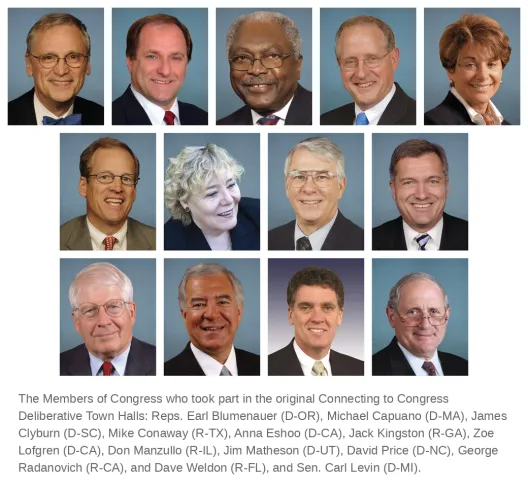
Twenty years later, we've replicated these findings over and over again, despite even higher polarization, in countries beyond the US. We've documented that participating in Deliberative Town Halls doesn't just change constituents' minds, but also the Members— and sometimes their votes as well. We've also found that Deliberative Town Halls produce the largest drop in partisan hostility ever documented, rolling back over 30 years of affective polarization after one 90-minute intervention. The model has traveled far beyond Washington, from the UK Parliament and Australia's House of Representatives to Chile, Nigeria, and now Malawi.
As the program marks its 20th anniversary this year, we've begun work on a series of reports compiling all these important findings. Look for our first report, focused on the effects Deliberative Town Halls have on citizens, coming out in early fall. Below are some of the most important updates on our other recent work.
Climate, Development, and Democratic Accountability in Malawi
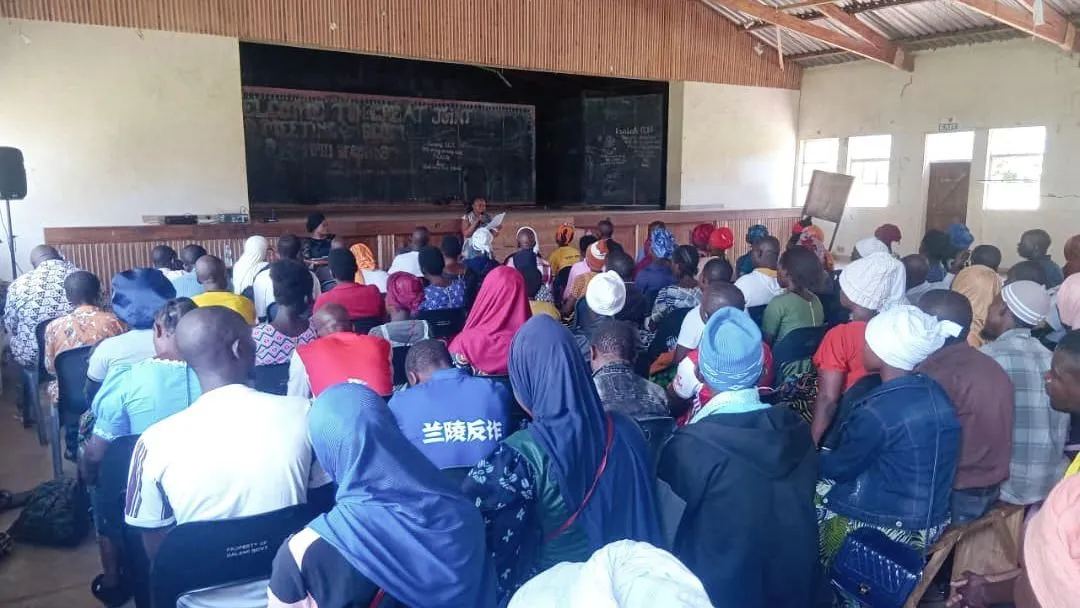
In 2023, Cyclone Freddy devastated southern Malawi, destroying critical bridges. Quick, low-cost rebuilding often results in structures vulnerable to future storms. IDEA graduate researcher Jack Fernandes introduced a Deliberative Town Hall in Machinga East and Mulanje Bale, Malawi, to assess whether structured deliberation could encourage citizens and representatives to support long-term, climate-resilient construction. Malawi is the sixth and perhaps most challenging country for IDEA’s Deliberative Town Hall model, given its rural, low-technology, and climate-exposed context, where representation does not always reach all communities. Read More
Deliberative State Governance Meeting in Brussels
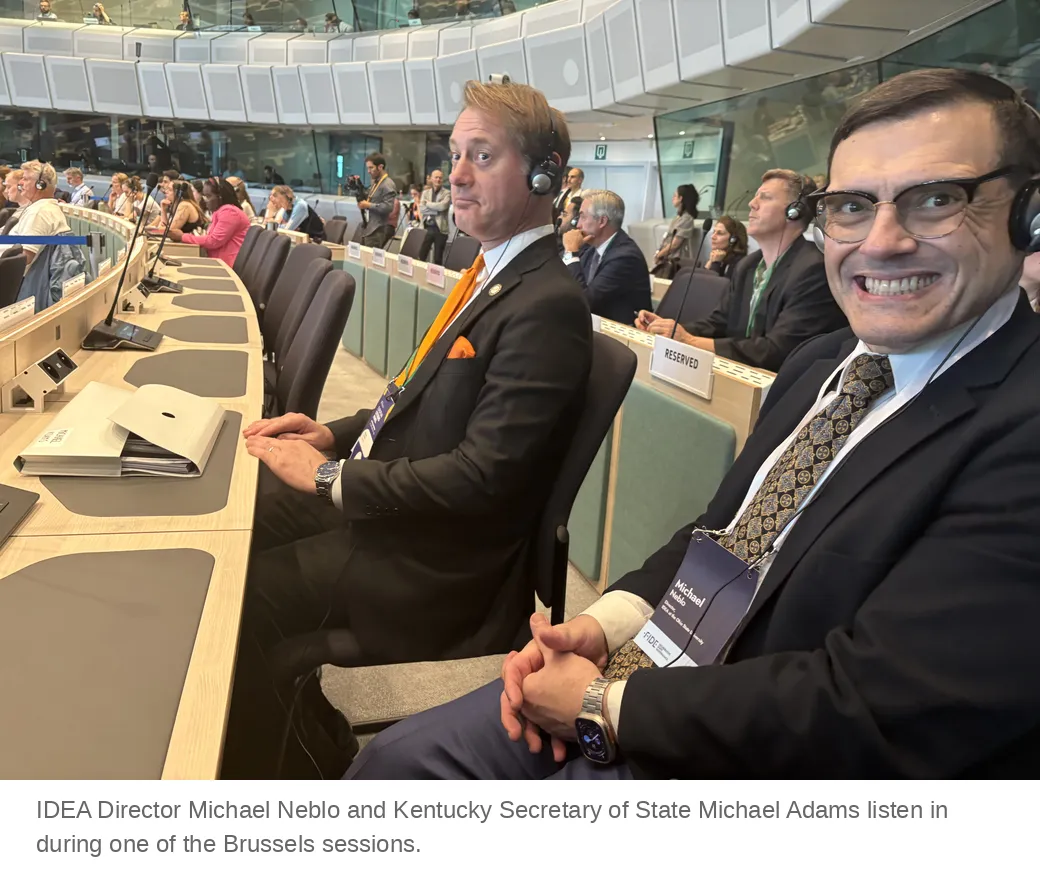
IDEA supported a four-day study tour that brought senior officials from Kentucky, Maryland, Pennsylvania, Utah, and Washington to Brussels to learn how Europe transformed Citizens’ Assemblies into permanent institutions. Led by our partner FIDE-NA, this trip begins joint efforts to pair Citizens’ Assemblies with Deliberative Town Halls at the state level in the United States. “FIDE-NA has probably the most expertise of any organization in the U.S. in adapting Citizens Assemblies to the U.S. context, and we’re working with them to develop projects sequencing Citizens Assemblies and Deliberative Town Halls at the state level,” said Associate Director Amy Lee.
The delegation will reconvene in the United States this fall to observe a Citizens’ Assembly and consider how to implement one at home, positioning IDEA and FIDE-NA at the forefront of efforts to integrate deliberation into state governance.
Summer Democracy Fellows Head to Capitol Hill
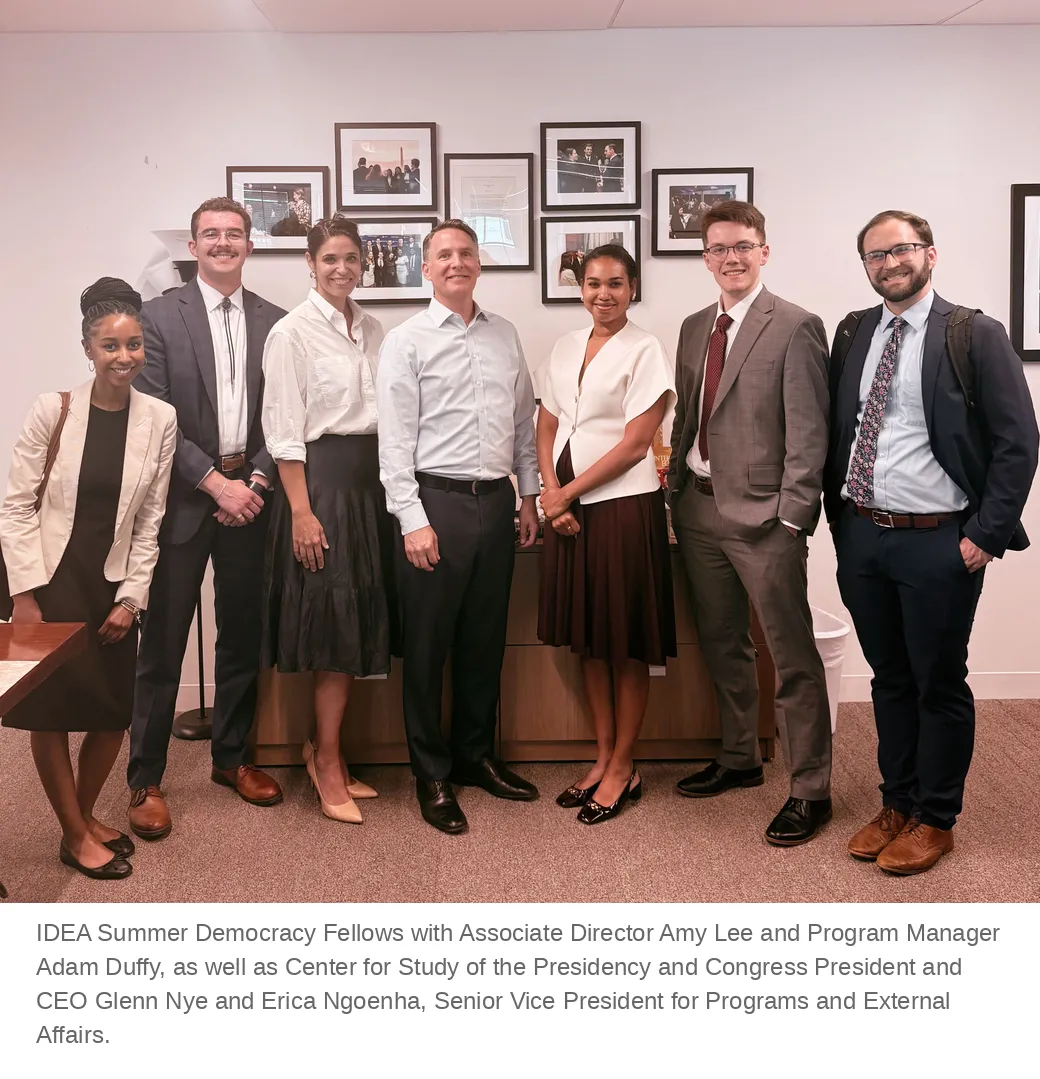
This year, IDEA launched its inaugural cohort of Summer Democracy Fellows, undergraduate OSU students with experience in IDEA’s two-way constituent engagement model, who are interning in congressional offices and helping those offices build their own capacity.
The inaugural Fellows are Maxwell Kiernan (sophomore, Politics, Philosophy, and Economics major with minors in History and Psychology), Ryan Mahoney (third-year, double major in Political Science and Economics with a minor in History), and Elise Britton (third-year, Political Science major with minors in Social Justice Advocacy & Public Policy and Civic Engagement). Maxwell is with Congressman Greg Landsman, Ryan with Congresswoman Emilia Strong Sykes, and Elise with Congresswoman Shontel Brown. The students report that the experience has been eye-opening and inspiring—you can follow more of their learning and growth during their summer in DC on our social media. Read More
Coming this fall: Deliberative Town in Korea
This fall, IDEA will host its first Deliberative Town Halls with Korean Members of Parliament, marking our initial test of the model in East Asia and exploring how media involvement can broaden its impact. IDEA Graduate Assistant Euchan Jang is leading this work, adapting elements from other international Deliberative Town Halls as well as his own research—we’ll share more about this project on our website later this summer.
IDEA Launches Its First Advisory Board
Four years of consistent support from Ohio State have enabled IDEA to expand its staff and project portfolio. This spring, the Institute established its first Advisory Board to help guide its future direction. The board brings external expertise in election law, ethics, public affairs, and food systems, ensuring that IDEA’s work remains rigorous and responsive as it grows. Read More