Nigerian Deliberative Town Halls
In 2024, IDEA brought Deliberative Town Halls to Nigeria, connecting more than 1,200 citizens directly with members of the National Assembly.
In early 2024, IDEA introduced the Deliberative Town Hall (DTH) model in Nigeria for the first time, bringing together more than 1,200 citizens from two very different constituencies for direct conversations with members of the National Assembly. Citizens in Bende in southeastern Nigeria and Baruten/Kaiama in the north deliberated with their representatives, Hon. Benjamin Kalu and Hon. Mohammed Omar Bio, about infrastructure priorities, representation, government, and democracy.
Designed as a randomized field experiment, the project tested whether a model developed through nearly two decades of IDEA research could be adapted to a very different political and social context. The results went beyond the participants themselves: citizens who never attended the town halls also shifted their views in similar directions on several measures, a spillover effect IDEA had not observed in two decades of DTH research.
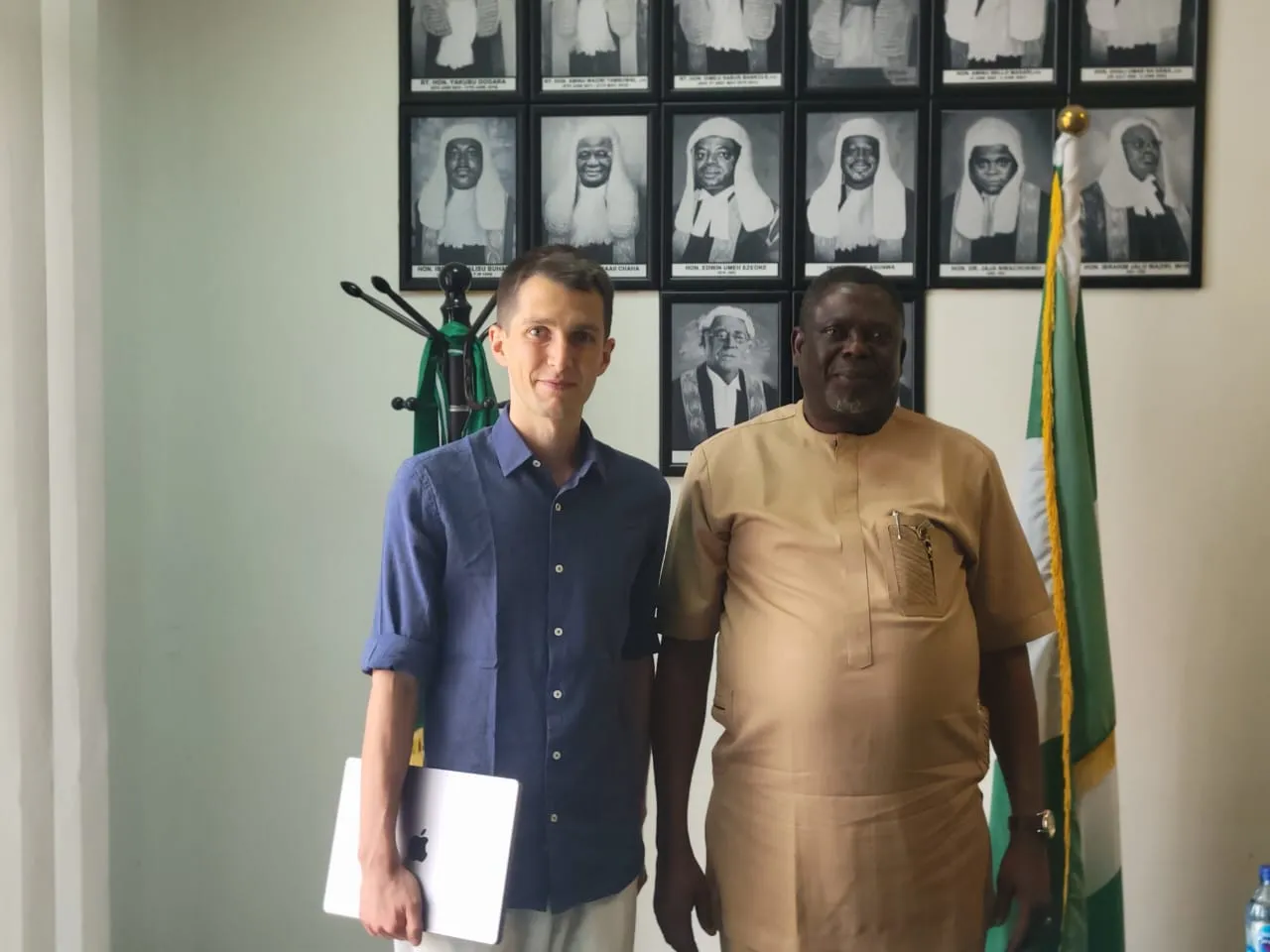
The project grew out of relationships within Nigeria's National Assembly. IDEA Fellow Marco Castradori, a PhD candidate at Princeton University who had lived in Nigeria and developed relationships with elected officials there, helped spearhead the effort after the Deputy Speaker of the Federal House of Representatives agreed to participate.
“It was an incredible new opportunity,” said Dr. Michael Neblo, IDEA’s director. “IDEA had already expanded beyond the U.S., working in countries like Australia and the U.K., and even gaining valuable experience in Chile, a non-English-speaking country in the Global South.”
Nigeria offered an especially important test for the DTH model. Public dissatisfaction with the country's democracy was high, but IDEA's previous research suggested that dissatisfaction does not necessarily mean citizens are unwilling to participate. The Nigerian project asked a different question: What happens when citizens are given a meaningful and structured way to engage directly with their representatives?
Adapting the DTH Model
Bringing the DTH model to Nigeria required more than simply reproducing the online town halls IDEA had conducted elsewhere.
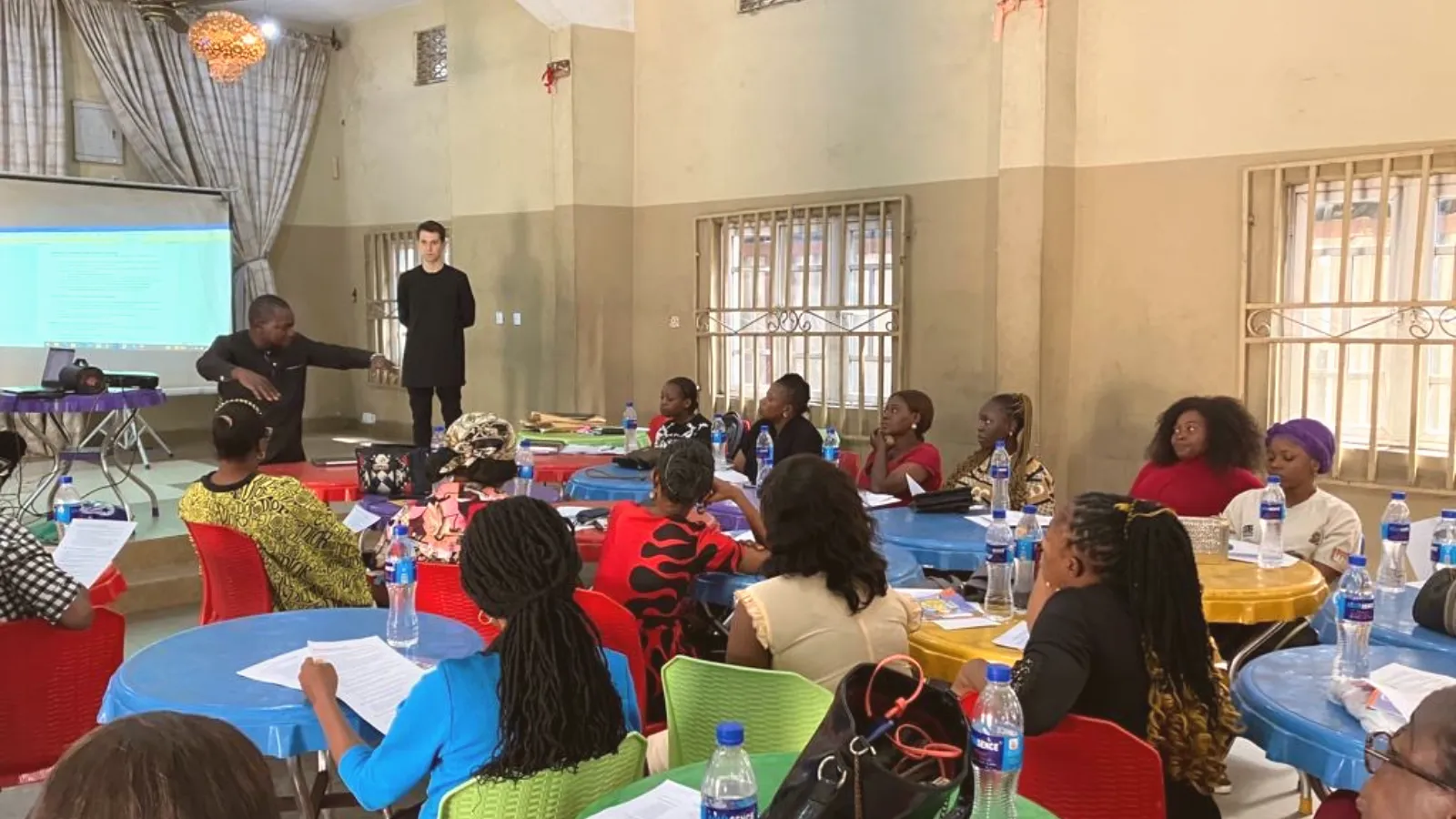
Previous DTHs assumed that participants could reliably access the internet and review written briefing materials before an event. In the Nigerian constituencies, differences in connectivity, literacy, and access to technology required IDEA and its local partners to adapt the model while preserving its core principles.

Each adaptation addressed a specific barrier to participation:
- Briefing materials moved from text to video. Participants received the same balanced, nonpartisan background information via video, reducing differences attributable to reading level.
- The event moved from individual screens to shared community sites. Working with NOI Polls, a Nigeria-based research organization, IDEA established locations with reliable internet connections and linked them live to participating members of the National Assembly.
- Facilitation moved into the room. Local facilitators gathered questions and comments and passed them to the central moderation team, allowing people without individual devices to participate fully.
- Surveys were administered locally. Nigerian researchers collected responses in participants' preferred languages, enabling a broader range of citizens to participate in the research.
The format changed, but the defining features of the DTH remained the same: representative participation, balanced information, neutral moderation, direct engagement with elected officials, and pre- and post-event surveys to measure what changed.
“The prospect of exploring how Deliberative Town Halls could function in a rapidly growing, diverse, and dynamic nation like Nigeria, which is poised to become the world’s third-most-populous country by 2050, was both exciting and immensely rewarding,” Neblo said. “It was an unparalleled chance to strengthen democracy in such a critical context.”
Bringing Citizens and Representatives Together
On January 27, 2024, citizens in Bende participated in a Deliberative Town Hall with Hon. Benjamin Kalu, Deputy Speaker of Nigeria's Federal House of Representatives. One week later, on February 3, citizens in Baruten/Kaiama deliberated with Hon. Mohammed Omar Bio.
Across the two constituencies, more than 1,200 citizens participated in the study. Discussions explored citizens' views of their representatives, the Nigerian government, democracy, and priorities for infrastructure investment.
In both districts, participants showed substantial support for representatives who make decisions for the benefit of the country as a whole rather than simply distributing benefits to particular groups or communities. For some participants, the town hall itself demonstrated what a different relationship between citizens and government could look like.
“This meeting is a meeting that shows unity. This meeting shows us unity; we need unity in our community, state, and in Nigeria.”
DTH participant, Bende
Key Findings
- Both Hon. Kalu and Hon. Bio experienced increased approval and a higher reported likelihood of re-election. Attendees described their representatives as fair, trustworthy, qualified, accessible, and understanding. Non-attendees were more likely to attribute negative traits. Approval increased in both groups.
- Preference for democratic reform increased. After the town halls, prioritization of "making good laws for the whole country" rose by about 5% in both districts, and preference for legislators who serve all Nigerians rather than only their own region rose by about 7%.
- Infrastructure priorities showed modest differences across the four categories in both districts, with no significant changes after the event. In Bende, respondents prioritized healthcare and education over roads and electricity. In Baruten/Kaiama, healthcare and roads were prioritized over education and electricity. Both districts preferred roads connecting constituencies to those within their own districts. When ranking specific projects, Bende favored a new diagnostics center over a new eye care center and renovations to Umuimenyi Technical School. Baruten/Kaiama favored the University of Agriculture in Kaiama over the University of Science and Technology in Kosubosu and the College of Entrepreneurship and Vocational Studies in Okuta.
- Diverse demographic participation was evident at both town halls. In Bende, 54.3% of participants identified with no political party, and village residents were well represented. In Baruten/Kaiama, participation was nearly equal between village and town residents, as well as between blue-collar and white-collar workers.
- Attendees reported high satisfaction, feeling enthusiastic and hopeful, with very few expressing worry, anger, or confusion. They valued the discussions, became more respectful of differing views, and reconsidered some of their own positions. A strong majority supported holding more Deliberative Town Halls, and nearly all said they would attend again. Attendees were divided on whether such events could change democracy in Nigeria, with slightly more expressing doubt than confidence, making their subsequent comments more notable.
- There is strong potential for spillover effects. Changes among non-attendees mirrored those among attendees in approval, voting intentions, and reform preferences. IDEA had not observed this pattern in two decades of similar research.
The Conversation Reached Beyond the Room
Quite simply, nothing like this has ever been done in Nigeria before," said Castradori.
Many sub-Saharan African countries pursued democratic reforms in the 1990s, and progress soon stalled. One influential explanation held that informal aspects of African civil society could not support the formal institutions built on top of them, and that citizens themselves prefer personal and particularistic politics, or cannot picture an alternative clearly enough to demand it.
The Nigerian results point elsewhere. What appears to be a preference for clientelism is better understood as a strategic response to constrained choices. Participants moved toward support for democratic reform, and so did people who never entered the room.
That second result is what makes the study unusual, and it cuts both ways. Because the treatment and control groups moved together, the experiment cannot isolate a clean effect of attending. IDEA's leading explanation is that attendees left excited and shared the experience through word of mouth across their social networks. That reading fits the interview record, but it remains an interpretation rather than a measured finding, and testing it directly is part of what the next phase is designed to do.
"This is the first time I have ever felt like a real citizen, not a pauper going to see the big man."
Participant, Bende
Asked whether the town hall would have any lasting effect, a few participants were doubtful. One replied:
"Change has begun already. Since the onset of [Nigerian democracy], no one has ever called a meeting like this. So, with this meeting, change has already started." Participant, Bende
Read the 2024 Project Reports
- Nigerian Deliberative Town Hall Analysis
Prepared for Hon. Mohammed Omar Bio
- Deliberative Town Hall Findings: Bende Federal Constituency, Nigeria
Prepared for Hon. Kalu
What Comes Next
"What we may have uncovered here, and what we're testing next, is whether these 'spillover' effects are a sign of deep latent demand for democratic reform in this young and quickly growing democracy," Neblo said.
Building on the 2024 events, IDEA completed a second project in Nigeria in 2026, with a larger group of lawmakers. It is designed to test whether the initial findings are replicated and whether the spillover can be observed directly rather than inferred. Project reports, key findings, and additional photographs will be shared as they become available.
Related Story
Read A Conversation with Marco Castradori to learn more about the Nigerian Deliberative Town Hall project and the experience behind the research.