Climate, Development, and the Future of Democratic Accountability
In 2023, Cyclone Freddy tore through southern Malawi. Among the infrastructure it destroyed was the Naming'azi Bridge in Machinga East, where most households depend on subsistence farming. Replacing it cost roughly 50 million kwacha, or about 29,000 US dollars. A similar story unfolded in Mulanje Bale, where 11 million kwacha, or about 6,000 US dollars, was allocated to rehabilitate the Mponda Bridge following earlier storm damage. These were not isolated events. They are the new pattern in a country where climate disasters reshape what communities can build, keep, and plan for. The question that pattern raises is not only about engineering or money. It is about democracy. When pressure on elected officials favors quick, visible results, infrastructure built for the next election often fails before the next storm.
Breaking this cycle of short-term thinking has long been a goal of development practitioners and elected leaders alike, yet the political incentives in climate-vulnerable areas often work against it. IDEA graduate researcher Jack Fernandes asked whether deliberative engagement, drawing on IDEA's earlier infrastructure work in Nigeria, could change the dynamic: could a Deliberative Town Hall shift citizens' preferences toward longer-term construction and give elected officials the incentive to support it?
Background
Malawi is the sixth country where IDEA has conducted translational research with its Deliberative Town Hall model. Each context stretches the model differently. Malawi adds what may be the hardest test: a rural, low-technology, climate-exposed setting where institutions of representation exist but are not always closely connected to the communities they serve.
Why Malawi
Malawi is a young, active democracy of more than twenty million people, with a parliament that has publicly debated in recent years who should manage constituency development funds, the primary vehicle for local infrastructure spending. The country faces some of the most severe climate pressures in the region. Cyclone Freddy in 2023 and Cyclone Idai in 2019 damaged roads, bridges, and farms across the south. Rainfall patterns have shifted, droughts have become more frequent, and the cost of infrastructure failure keeps rising. Roughly eighty percent of the population depends on subsistence farming, making short-term hardship immediate and long-term climate exposure feel abstract. That tension is exactly what a Deliberative Town Hall could help citizens consider and make an informed judgment on.
The opportunity in Malawi is twofold. It is a chance to test whether a model developed in higher-technology contexts can work in a low-technology rural setting and to inform a vital national policy debate.
Research Design and Implementation
After developing a robust research design, IDEA researchers collaborated with two Malawian MPs,
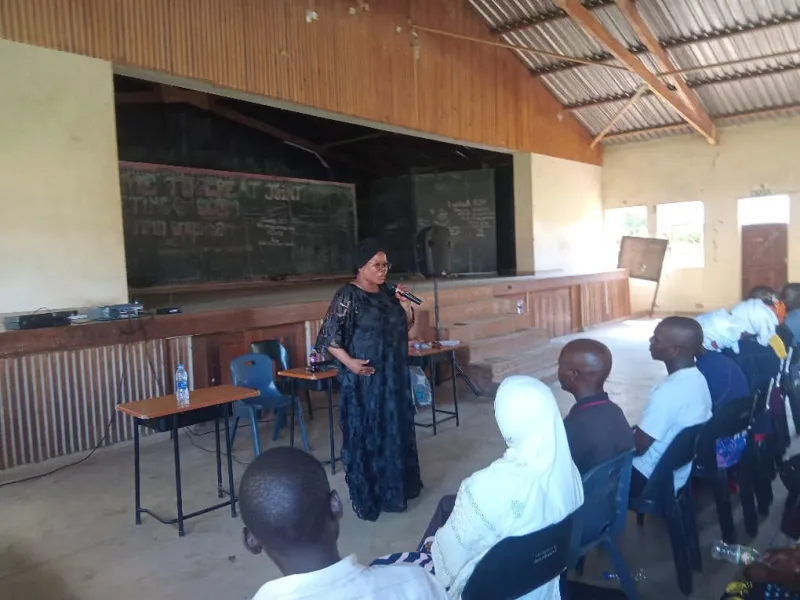
Hon. Victor Musowa, First Deputy Speaker of the National Assembly and MP for Mulanje Bale, and Hon. Esther Jolobala, Second Deputy Speaker and MP for Machinga East. Jolobala is the first woman ever elected to represent her constituency and serves on Parliament's Natural Resources and Climate Change Committee. Their participation placed the work in direct conversation with the officials who shape national policy on constituency development funds.
For this study, 290 Village Development Committee representatives were sampled across 290 villages, with 164 surveyed in Machinga East and 126 in Mulanje Bale. Villages were randomly assigned to participate in a Deliberative Town Hall with their sitting Member of Parliament. Surveys before and after the town halls traced how the experience reshaped views on development priorities, perceptions of climate risk, and evaluations of political accountability. An embedded climate risk information treatment in the endline survey tested how different risk framings shape citizens' preferences. These instruments would allow the research team to assess:
- Does deliberation shift citizen preferences toward more climate-resilient, longer-lasting infrastructure? Does it change how VDC members evaluate their MP on fairness, responsiveness, and legitimacy?
- Does it affect willingness to prioritize future generations in public investment?
- Does information about climate risk, independently or combined with deliberation, move these outcomes further?
The typical DTH design was adapted to the Malawian context in two ways.
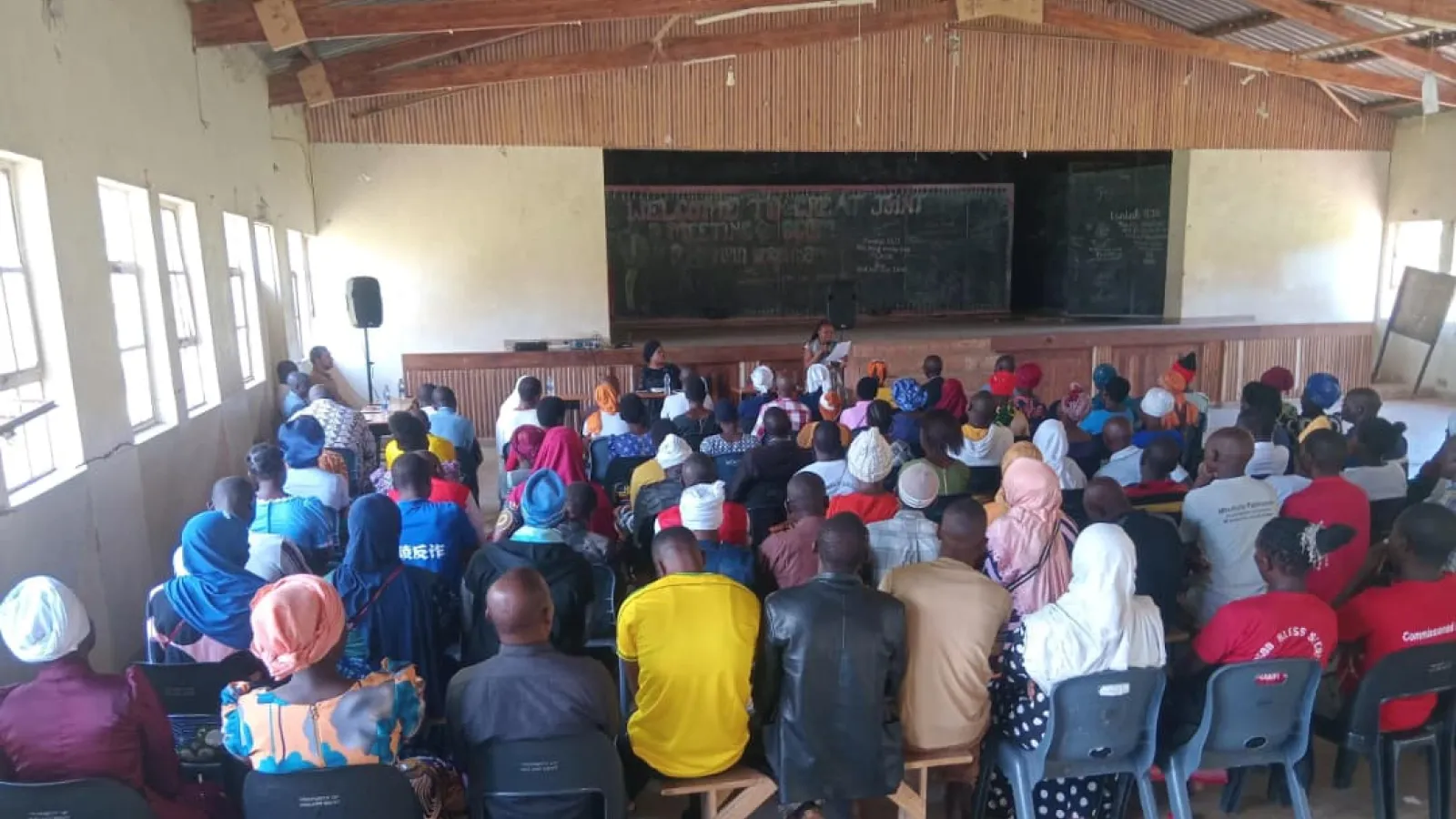
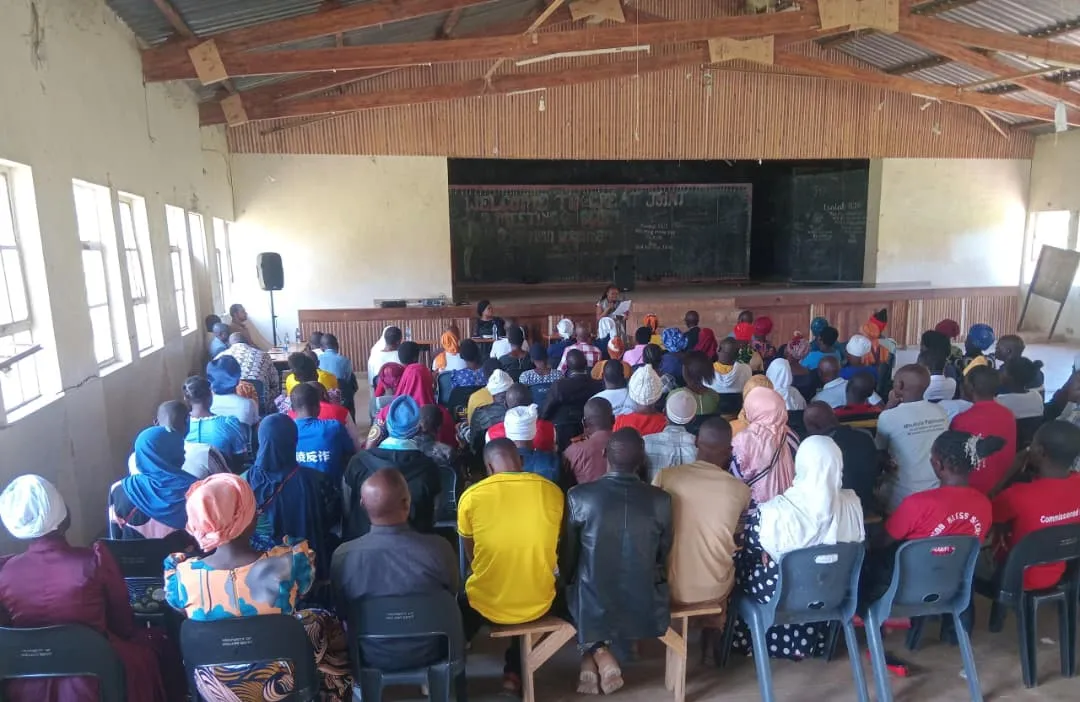
First, the model was delivered entirely in person and in Chichewa, eliminating the online or hybrid format used in higher-connectivity settings. Second, Village Development Committee representatives, who already hold recognized civic roles, were used as the unit of participation, rather than the general public at large. This is a significant shift from IDEA’s normal practice, but it allows researchers to see how grounding the intervention in existing institutions affects the result.
Fieldwork was carried out in partnership with the Zomba-based Institute of Public Opinion and Research. The study was conducted under the ethical oversight of both The Ohio State University and the University of Malawi.
What’s Next
Field work concluded in May 2026, and analysis is underway. The research is measuring four sets of outcomes:
- Preferences for long-term infrastructure over short-term projects, measured through paired comparisons such as concrete bridges versus timber bridges, or shorter roads with proper drainage versus longer roads without.
- Perceptions of flood and drought risk, and how those perceptions respond to structured information.
- Evaluations of Member of Parliament responsiveness, fairness, and legitimacy, before and after direct deliberation.
- Willingness to prioritize future generations in public investment decisions, including distributional preferences around constituency development fund allocation.
In addition to these specific measures on preferences, the study examines a broader question about democratic life. At its core, the project asks whether structured deliberation can strengthen trust, legitimacy, and accountability between citizens and their elected representatives. If even part of that relationship can be reshaped in a rural, low-technology setting, the implications reach beyond the two constituencies where the fieldwork took place.
Preliminary findings will be shared first with the participating MPs, then with Malawi's Parliament, the University of Malawi, and the international research community. A follow-up field phase is under consideration, including longer-term tracking of how constituency development fund spending decisions evolve in the treatment constituencies and possible extension to additional constituencies if findings and resources align.
Impact
Malawi extends IDEA's evidence base into a setting that matters for democratic theory and policy practice. If deliberation holds here, in a rural, low-income, climate-exposed context, the case for deliberative innovation in the Global South strengthens considerably. If it does not hold, or holds only under certain conditions, those conditions themselves are a finding worth having.
The project also contributes a methodological innovation. Running a Deliberative Town Hall entirely in person, in a local language, with a sample drawn through existing civic institutions rather than online recruitment, is a model that travels. It is replicable in other low-connectivity settings where institutions of representation exist, but the practice of deliberation does not.
Finally, the project enters an active Malawian policy debate. Findings will be submitted to Parliament and to the University of Malawi. Each participating MP will receive an individual report showing how deliberation shaped citizens' views in their constituency. Area Development Committees will receive briefs they can use in their own planning. The full results will speak to policymakers, philanthropy, and the international aid community about whether and where deliberation can be a practical tool for climate-resilient governance.