Publication and Resources
32 results found

Escaping the Deliverism Trap: Recognition and Representation in Nigerian Democracy
A field experiment in three Nigerian constituencies tests whether Deliberative Town Halls can strengthen trust and political standing without material benefits.
Has Change Begun Already? Latent Demand for Democratic Reform Among Nigerian Citizens
A field experiment in two Nigerian constituencies finds that demand for democratic reform runs deeper than expected, with both participants and non-participants shifting toward pro-democratic…

Does Familiarity Breed Esteem?
This study tests the adage "familiarity breeds contempt" in the context of political representation. Using a randomized experiment, it finds that interacting with a legislator in a…

Connecting to Congress During COVID-19: Political Representation and Two-Way Crisis Communication
This study analyzes how members of Congress used online Town Halls during the pandemic to disseminate public health information and facilitate two-way crisis communication with…

Who Wants to Deliberate—And Why?
A study challenging the view that citizens are uninterested in politics. It finds that a large, diverse group of Americans—especially those turned off by partisan conflict—are willing to…

Testing the Benefits of Public Deliberation
A field experiment evaluating the practical benefits of deliberative forums. The results show that deliberation increases issue knowledge, alters policy attitudes, and enhances trust in government…

Means, Motive, and Opportunity in Becoming Informed About Politics
An investigation into why some citizens become informed about politics while others do not. The study disentangles the roles of ability (means), desire (motive), and availability of information …

The Multiple Institutional Logics of Innovation
This paper examines how innovation is shaped by multiple institutional logics—such as market, state, and community logics—that coexist and interact within organizations. Through…

The Internet and the Madisonian Cycle
This chapter explores how digital tools can disrupt or reinforce the 'Madisonian cycle' of factionalism. It argues that the internet offers unique opportunities to bypass traditional…

Field Experiment Evidence of Substantive, Attributional, and Behavioral Persuasion by Members of Congress in Online Town Halls
A study providing rare field-experimental evidence that citizens can be persuaded by substantive arguments rather than just partisan cues. The findings suggest that well-designed online forums can…
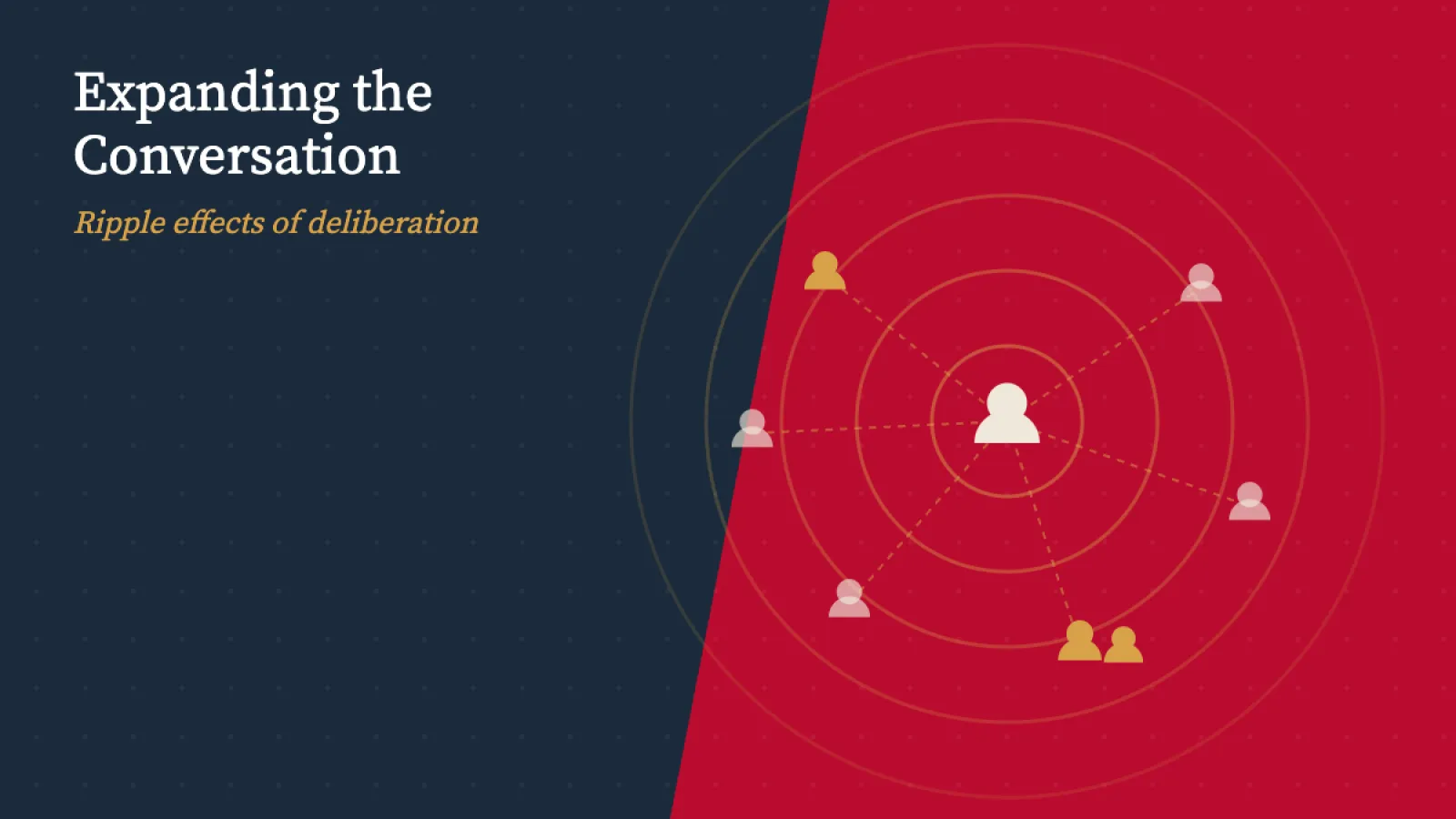
Expanding the Conversation: Multiplier Effects from a Deliberative Field Experiment
This research investigates how multi-channel communication strategies—combining online and offline methods—can reach a broader, more representative slice of the public. It offers…
Constituent Communication Through Telephone Town Halls: A Field Experiment Involving Members of Congress
This study investigates the effectiveness of telephone town halls (TTHs) as a tool for representation. Through a field experiment with members of Congress, the authors find that…
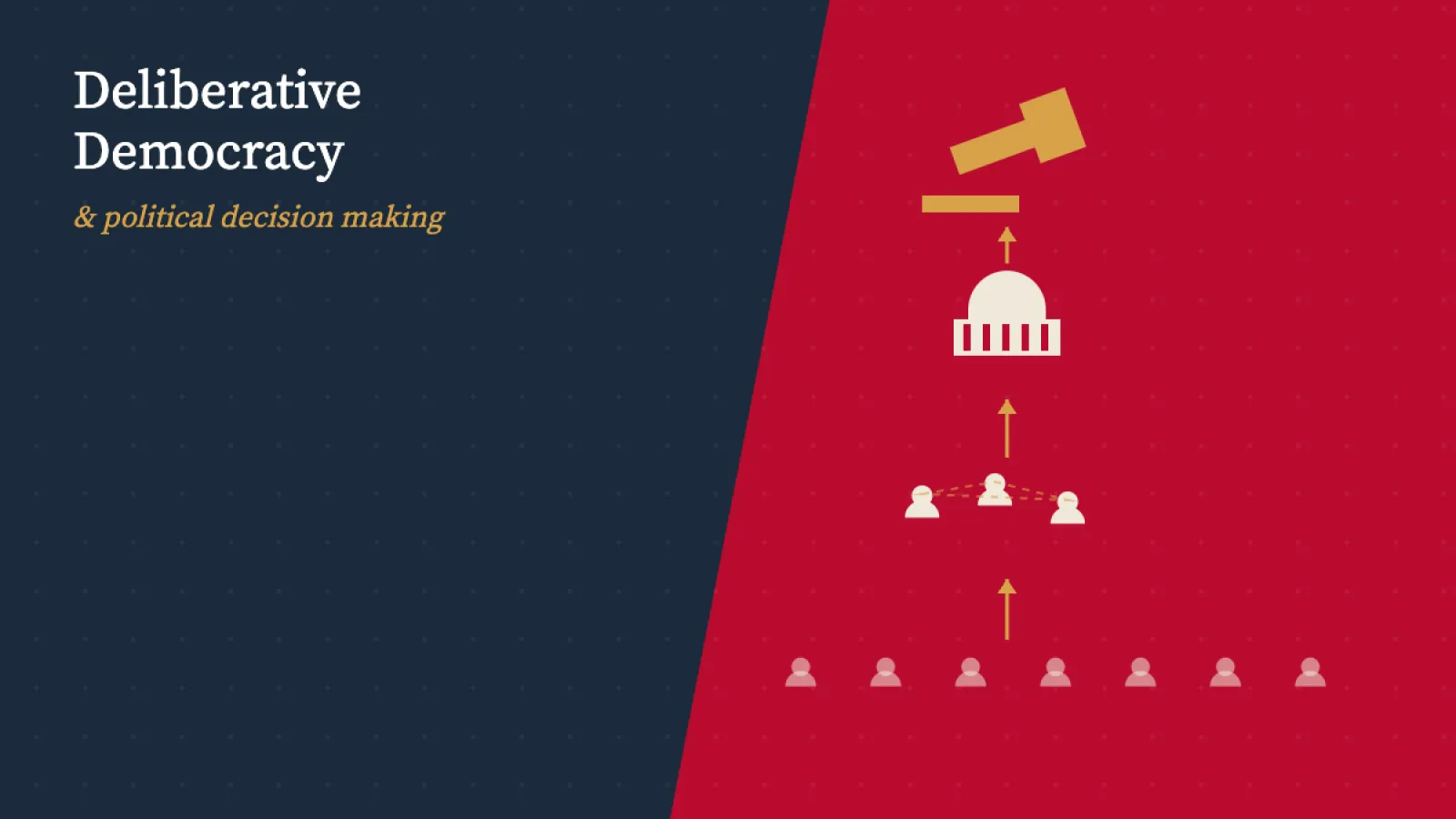
Deliberative Democracy and Political Decision Making
A comprehensive overview of how deliberative democracy functions within political systems. This entry explores how deliberation—from informal citizen discussions to formal government institutions…
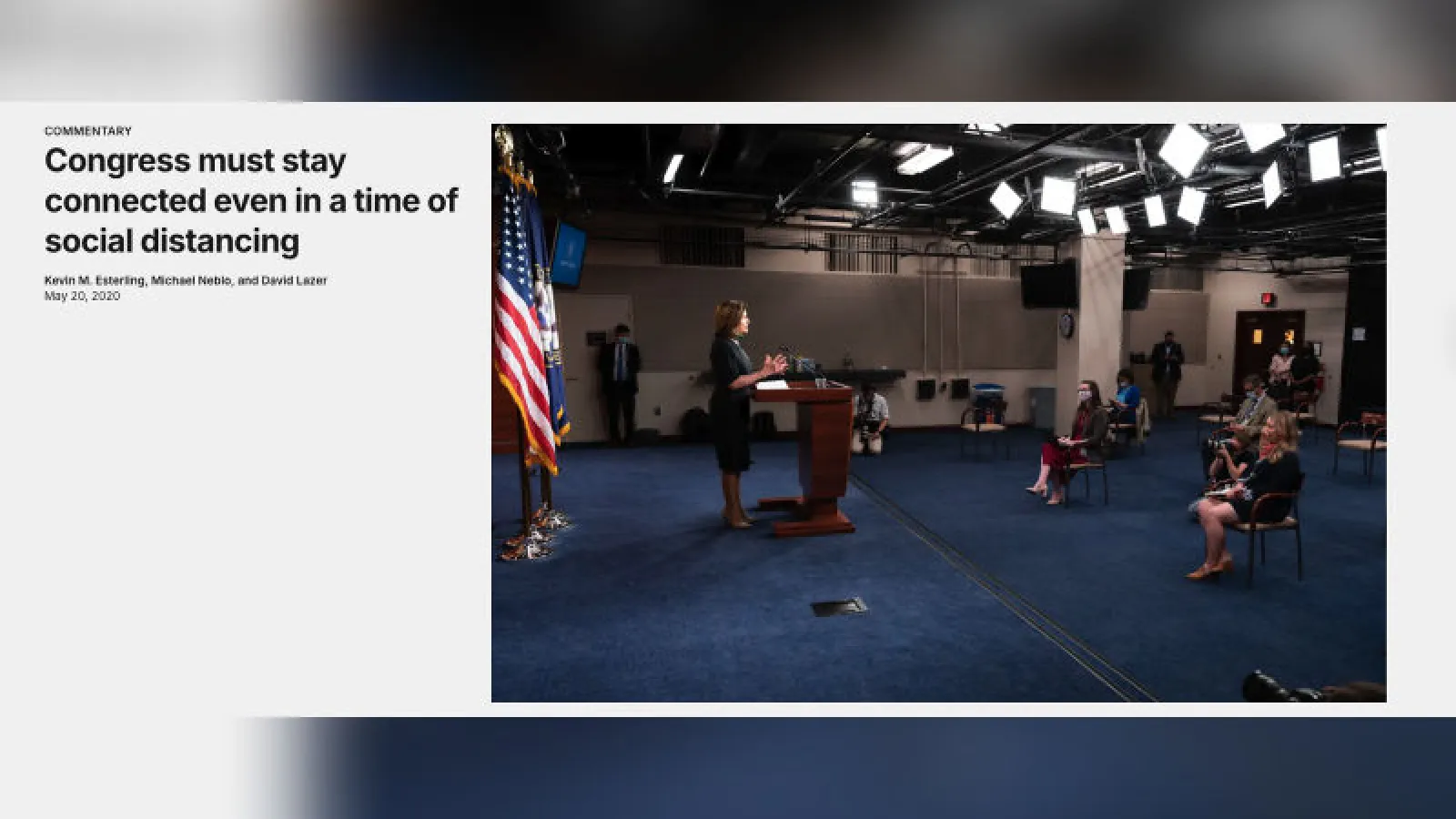
Congress Must Stay Connected Even in a Time of Social Distancing
Written during the COVID-19 pandemic, this article argues that Congress must adopt online deliberative tools to maintain its representative function when physical meetings are impossible. It…
The Coevolution of Networks and Political Attitudes
How do attitudes and social affiliations co-evolve? This study uses longitudinal data to track how citizens' political views shift based on their social networks, disentangling whether people…
Nigeria Deliberative Town Hall Bende: Opinions & Vote Intention About the Honourable
This working paper analyzes a field experiment from a town hall in Bende, Nigeria. It examines how direct engagement with a member of the National Assembly influenced constituents' voting…
Nigeria Deliberative Town Hall Bende: National v. Ethnic Identity
Focused on the Bende town hall, this paper investigates whether deliberative engagement can bridge deep societal divides. It specifically measures whether participating in a substantive policy…
UK Deliberative Town Halls: Policing, Interest and Attention
This companion paper to the UK study explores the behavioral impacts of deliberation. It investigates whether participating in a town hall on policing increases citizens' long-term political…
Picking People or Pushing Politics: Selection and Influence on Five Network Criteria
Do we choose friends who agree with us, or do we become like the friends we have? This study disaggregates social networks into five distinct types—including friendship, respect, and political…
Barbarians at the Gate & Neighbors Next Door: Policy Knowledge, Anxiety, & Public Opinion about Immigration in the U.S.
What actually drives public opinion on immigration? This study disentangles the roles of economic anxiety, cultural threat, and policy knowledge. It finds that "status anxiety"—the fear of…
Motive Matters: Liberalism & Insincerity
Does political liberalism force citizens—especially religious ones—to be insincere about their deepest beliefs? This paper defends the concept of "public reason" against critics who claim it…
The Weight of Passion: A Revisionist History of Political Emotion
A historical re-examination of how political philosophers have viewed emotion. This paper challenges the traditional binary between "rational" politics and "irrational" passion, arguing that major…
Two Field Experiments on Leadership and Political Persuasion
This paper presents results from two field experiments involving twelve members of Congress. It finds that direct engagement with leaders leads to substantial persuasion across three dimensions:…
How We Do Things with Surveys: Recognizing Polls as ‘Speech Acts’ Will Improve the Science of Public Opinion
By reframing survey responses as "speech acts" rather than mere data points, this paper argues that scholars can better understand the communicative intent behind public opinion polls and improve…
An Experimental Comparison of AI-Enabled Semi-Structured Interviews and Fixed Surveys: Response Patterns, Quality, and Representation
A methodological study comparing the data quality of AI-conducted semi-structured interviews versus traditional fixed-choice surveys. The researchers evaluate response patterns and…
Thrasymachus’s Blush: Between the Science of Reason & the Politics of Emotion
This paper pushes back against "democratic realists" who argue that citizens are too irrational for democracy. By revisiting the dialogue of Thrasymachus, it argues that recent findings in…
A Theory of Deliberation as Interactive Reasoning
This paper bridges the gap between formal theory and normative deliberative democracy. It develops a model of "interactive reasoning" where participants are motivated not just by strategy, but by…