Why listening matters for democracy: Michael Neblo co-edits new Routledge book
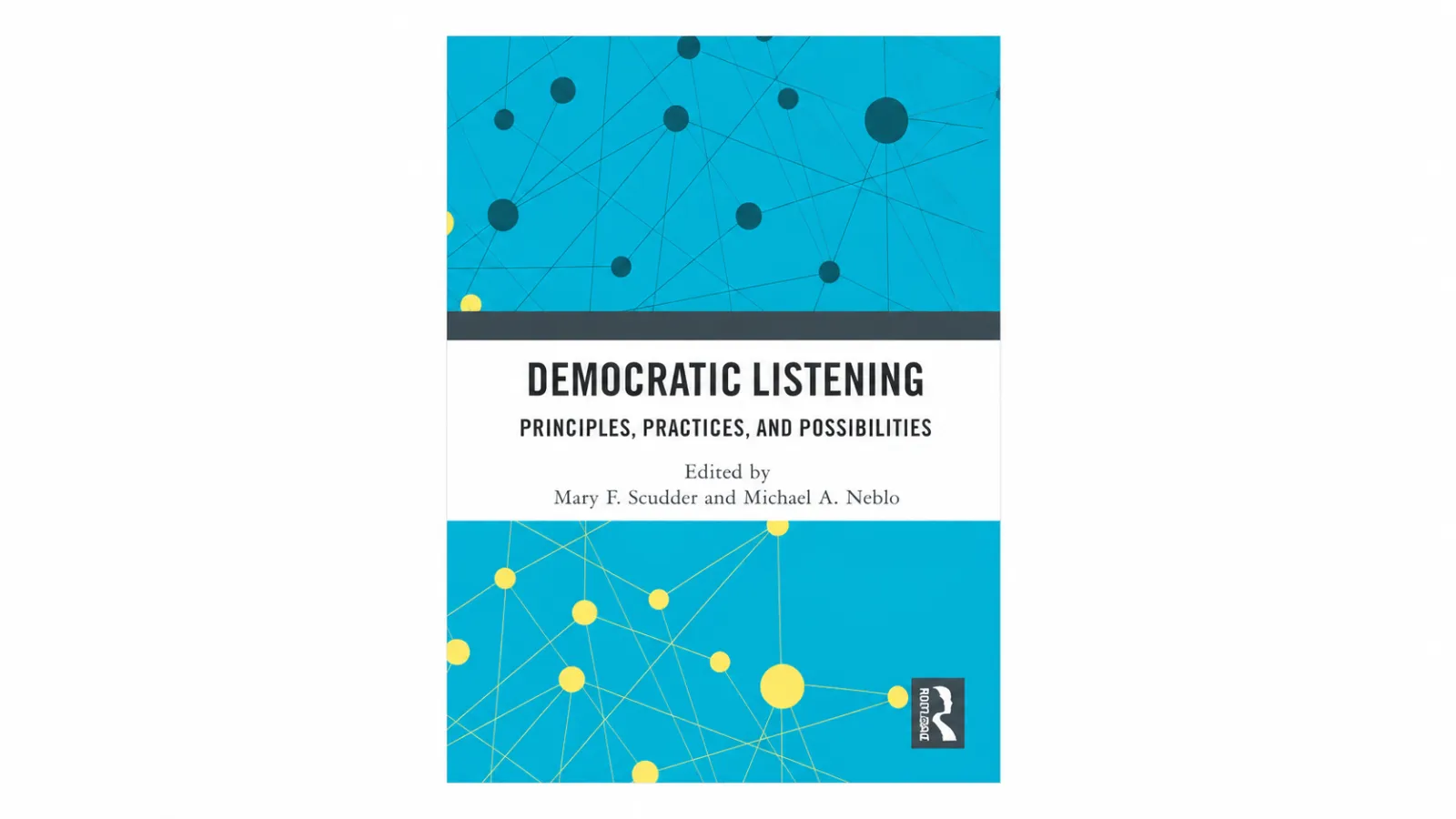
IDEA Director Michael Neblo and Mary F. Scudder of Purdue University have co-edited Democratic Listening: Principles, Practices, and Possibilities, a new collection from Routledge.
The book asks why listening matters in democratic communication. Listening, the editors argue, is not merely passive: it expresses, relies on, and alters power. If we understand listening and ignoring as acts of political power, the editors ask, what does a democratic practice of listening involve?
The chapters combine philosophical, observational, and experimental research, using methods that range from meta-analyses to field experiments. They examine when and how listening takes place, what gets in its way, and what it means for representation, deliberation, and policymaking. The studies help explain how and why listening matters, especially in times of democratic stress, and show how it shapes voter confidence, reduces in-group bias, and influences how legislators engage with constituents.
Intended for scholars and practitioners in political science, communication studies, democratic theory, and public policy, the book bridges normative political theory and empirical research and offers a framework for assessing listening as a democratic practice. Its essays first appeared as a special issue of the journal Political Communication.
Democratic Listening is available from Routledge.