IDEA hosts researchers and Ohio lawmakers for conversations on effective lawmaking
IDEA hosted two events on Oct. 19 exploring what helps lawmakers get things done. A morning research talk examined legislative effectiveness in Congress and the states, followed by an afternoon panel with Ohio lawmakers about working across party lines and serving constituents.
Craig Volden and Alan E. Wiseman, co-directors of the Center for Effective Lawmaking, led both discussions. The center is a partnership between the University of Virginia’s Frank Batten School of Leadership and Public Policy and Vanderbilt University. Both researchers previously worked at Ohio State, where their research on legislative effectiveness began.
Morning research talk
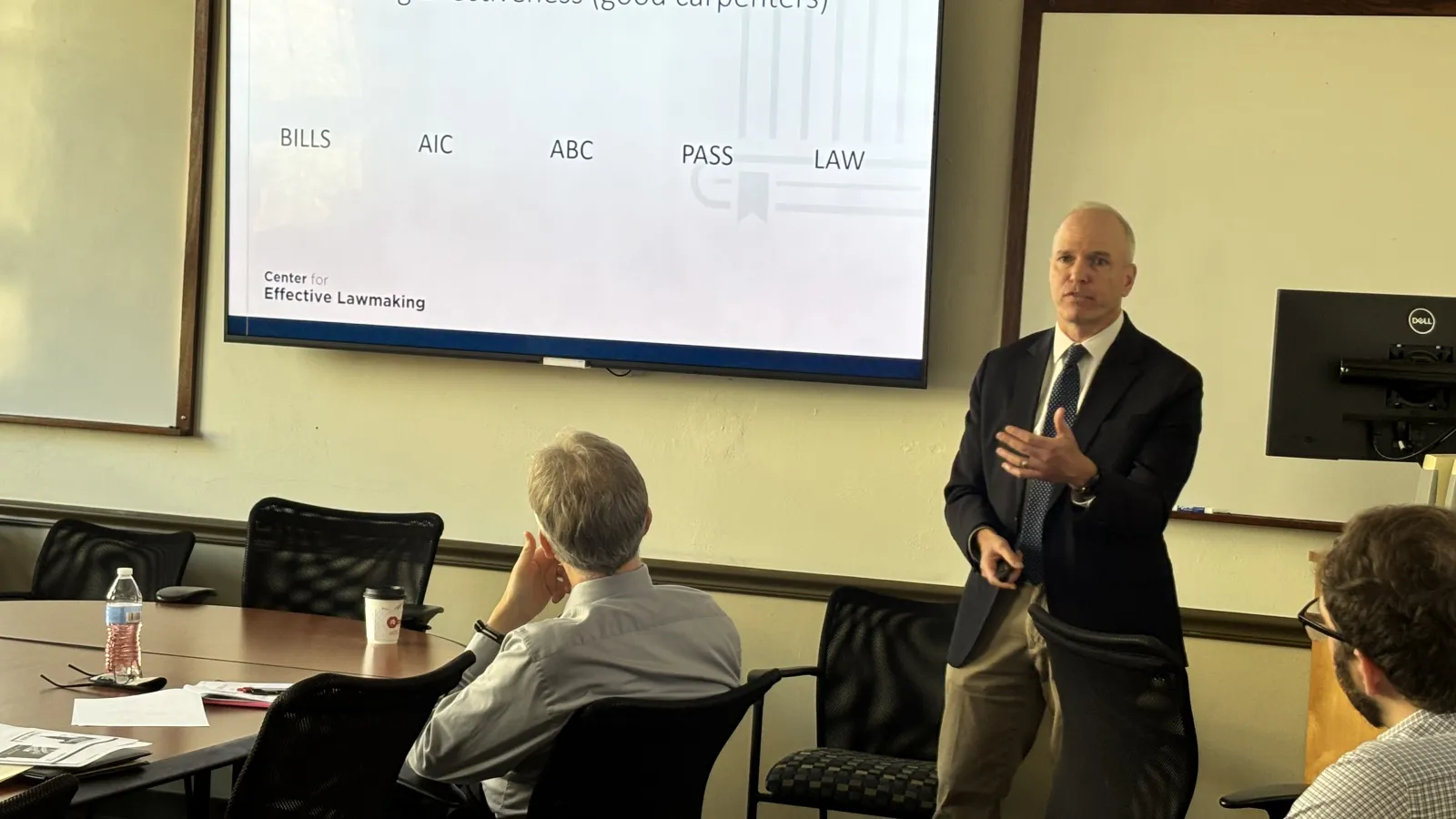
During the morning talk in Derby Hall, Wiseman explained how the center tracks legislation from introduction through passage, including bills whose language becomes law through other legislation. He also described how the center’s research has shaped congressional reform, including a memo the center sent to the House Select Committee on the Modernization of Congress recommending a higher cap on staff pay.
“[The recommendation] ended up being incorporated into the reforms that led to an increase in the salary cap,” Wiseman said.
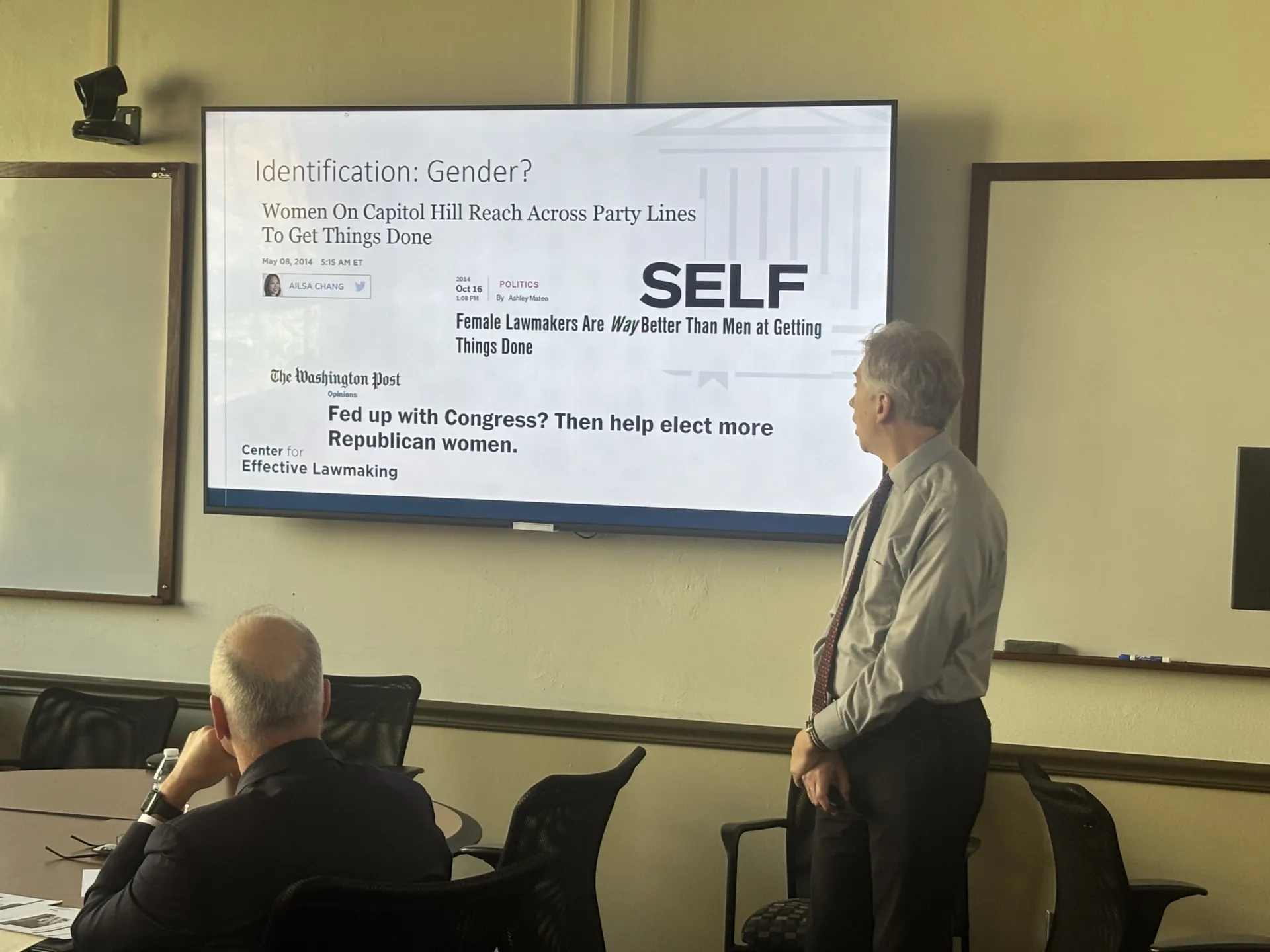
Volden shared findings showing that bipartisan support, experienced staff and focused policy expertise are associated with greater legislative effectiveness.
“Bipartisan lawmakers are much more effective than more partisan lawmakers,” Volden said.
Afternoon panel with Ohio lawmakers
That afternoon, state Rep. Latyna M. Humphrey, a Democrat from Columbus, and state Sen. Louis W. Blessing III, a Republican from the Cincinnati area, joined the conversation at the Ohio Union. Sen. Blessing participated via Zoom.
Opening the afternoon panel, IDEA Director Michael Neblo described how IDEA’s research and the Center for Effective Lawmaking’s research fit together: “Citizens speak, representatives answer, representatives deliver, citizens judge.”
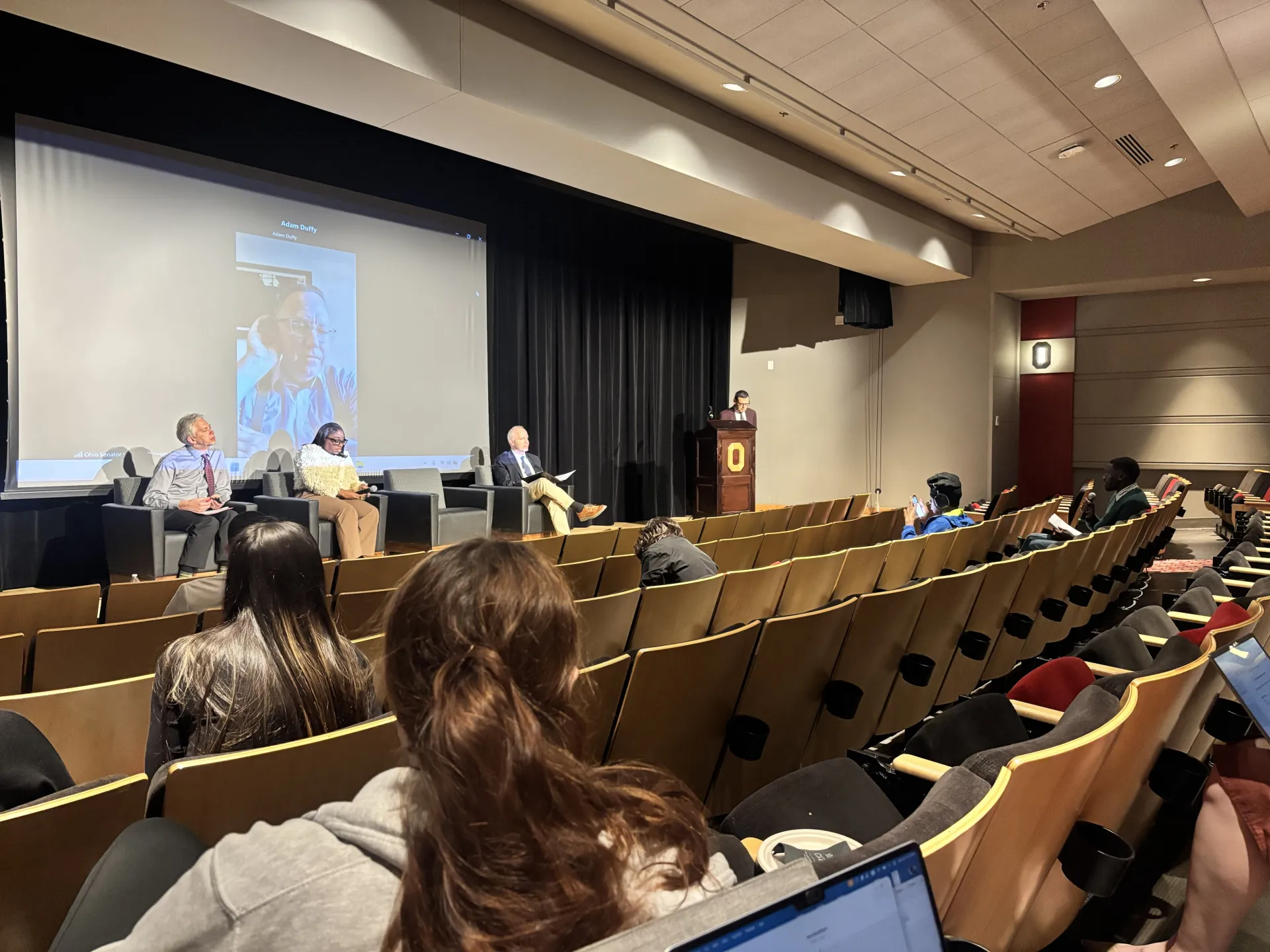
Rep. Humphrey described how relationships with Republican colleagues helped her advance proposals addressing infant mortality, criminal justice and small businesses. She emphasized finding partners who share an interest in solving a particular problem.
“We work together more often than we don’t,” Rep. Humphrey said.
Sen. Blessing described working with Democratic colleagues, including on a proposal targeting large institutional housing investors. He discussed the importance of pursuing difficult reforms and speaking up when lawmakers disagree with their own parties. He also cautioned against judging effectiveness only by the number of bills passed, noting the obstacles facing minority-party lawmakers and those challenging powerful interests.
“A good idea is a good idea,” Sen. Blessing said.
Students asked about choosing legislative partners, balancing district and statewide needs, and handling political pressure. Both lawmakers encouraged them to get involved in public service through volunteering, mentorship and running for office.
Watch the full panel