Citizens are not apathetic—they’re frustrated
Two decades of research, built for offices that want to hear from their whole district, not just the people who always show up.
Americans have not abandoned democracy; they have moved away from current engagement formats. When engagement is well designed, people participate, remain involved, and are open to new perspectives. IDEA partners with elected officials at all levels, applying two decades of research to create practical engagement strategies for offices.
Let’s discuss how this applies to your office.
The challenge lies in the format, not the public
Traditional town halls no longer serve most constituents. Increased polarization means they attract only the most partisan constituents and the same small group who attend every meeting, resulting in Members rarely learning anything new. Any exchange can be clipped and circulated for weeks afterward. Social media exacerbates the problem by rewarding the loudest voice and providing no information about the district. Offices reasonably conclude that the public is disengaged; research indicates otherwise. What is needed is a format that shows people that their input matters.
A Deliberative Town Hall addresses these challenges. Rather than relying on self-selection, it recruits a representative cross-section of the district. The session focuses on a single issue. Nonpartisan background materials are provided in advance, a neutral moderator guides the discussion, and Members answer questions live and transparently. Each element is designed to address a specific shortcoming of the traditional format.
Research findings
These results are based on randomized controlled trials in which participants were assigned to attend or not attend and surveyed before and after. Trust and approval of the Member increased significantly, including among constituents from the opposing party. Trust in Congress as an institution also improved. Participants were up to 10% more likely to vote. Attendance became more representative of the district, and hostility between members of opposing parties decreased by more than 50 points in some sessions.
This impact extends to office operations. IDEA interviewed staff in participating offices about observed changes. One Member changed their position on COVID-19 relief after hearing constituent concerns about partisanship. Another office identified a topic as more important to the district than previously thought, prompting the Member to co-sponsor a new bill and reintroduce another. A third office used IDEA's constituent data in discussions with the administration about messaging for a national policy proposal.
Collaboration with a committee
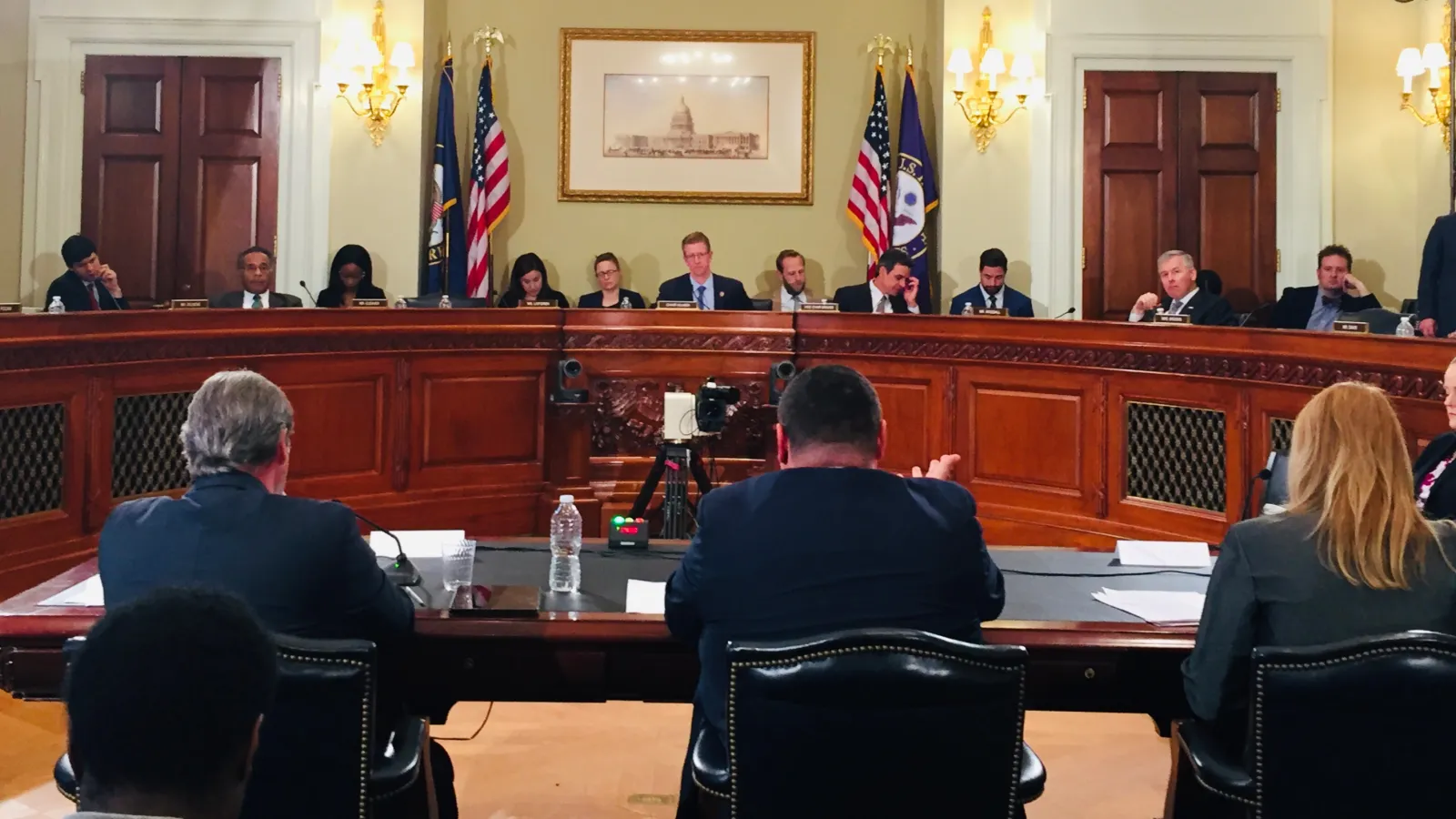
In October 2022, IDEA organized a Deliberative Town Hall with the House Select Committee on the Modernization of Congress and over 1,400 constituents selected as a nationally representative sample. Using multilevel regression with poststratification, IDEA estimated constituent opinion for all 435 congressional districts, allowing the Committee to share findings with Members beyond its own membership. Support for increasing congressional staff salaries rose from 46% to 79% after constituents learned about pay and turnover, and 98% of participants expressed interest in more deliberative engagement.
Why do offices work with IDEA?
IDEA began this work in 2006, when thirteen Members of Congress participated in field experiments that led to the first Deliberative Town Halls. The findings were published in peer-reviewed journals and in Politics with the People: Building a Directly Representative Democracy (2018). Connecting to Congress has since been recognized as a best practice by the Select Committee on the Modernization of Congress.
IDEA is a university institute focused on process rather than policy outcomes, encouraging participation from offices across the political spectrum. Our methods are transparent, our data is independent, and we provide reports to offices regardless of whether the findings are favorable.
IDEA manages recruitment, briefing materials, the platform, moderation, and analysis. Your office selects the topic and participates. You receive a report detailing what a representative sample of your constituents thinks, how their views have changed, and the reasons for those changes.